

What should be done when the manual soldering yield of lithium batteries is low? Automating the process is the key to breaking through the bottleneck!
Release time:
2026-03-16
In today's booming new energy industry, lithium batteries are the core energy storage components, and their production quality directly determines the reliability of the end products. However, many enterprises still face the predicament of low manual soldering yield - industry data shows that the manual soldering pass rate only remains at 82%-88%, with the defective rate of short circuits accounting for as high as 60%, becoming the top bottleneck restricting capacity improvement. Frequent rework, material waste, and safety hazards have left enterprises trapped in a vicious cycle of "high costs and low efficiency". How to solve this problem? The rise of automated spot welding technology is bringing a brand-new solution to lithium battery manufacturing enterprises.

I. Four core issues causing low manual soldering yield
Manual soldering, as a traditional process, has long been inadequate in the precise manufacturing of lithium batteries. The root causes of its defects mainly lie in four aspects:
1. Occasional short circuits: Invisible fatal hazards
Short circuits account for more than 60% of all soldering defects. The root causes are three core factors combined: incomplete cleaning of the terminals (45%), mismatch of welding parameters and the battery cell (35%), and a positioning deviation of the fixture ≥ 0.3mm (20%). Project data shows that when welding the terminals of a 314Ah battery cell, if the pressure is lower than 65MPa or the vibration time is shorter than 1.2s, the short circuit rate will sharply increase. During manual operation, workers find it difficult to precisely control these key parameters, resulting in weld points that seem connected but actually have poor contact, and are prone to short circuits or even fires due to vibration and heat during subsequent use.
2. Over-soldering and spatter: Visible quality losses
Manual soldering is difficult to precisely control the energy output. Excessive current can lead to overheating and over-soldering of the battery, damaging the internal structure of the battery cell; unstable current can cause spatter, resulting in nickel strip burn-through, and damage to the terminals. Especially in the scenario of cylindrical batteries and nickel strip welding, the thermal influence zone of manual operation can reach more than 0.5mm, far exceeding the 0.2mm control standard of automated equipment, directly affecting the battery's cycle life.
3. Type mismatch: The fatal flaw of flexible production
Commercial energy storage battery modules are replaced 2-3 times per month on average. Manual soldering requires re-adjusting parameters and adjusting fixtures, which is not only time-consuming and labor-intensive but also prone to a 40% increase in defect rate due to parameter setting deviations. Workers need to adapt to the welding requirements of different specifications of battery cells, and the differences in experience further amplify the quality fluctuations.
4. Human error: Uncontrollable stability challenges
The quality of manual soldering is highly dependent on the skill level and working condition of the operator. Skilled welders can weld an average of only 8-10 meters of weld seams per day, and cannot avoid operational deviations caused by fatigue and emotions. Data shows that the weld point tensile force of manual soldering fluctuates by ±15%, while automated equipment can control the fluctuation within ±3%, with a significant consistency gap. At the same time, senior welders earn a monthly salary of 12,000-18,000 yuan, and the cost of human resources is increasing year by year, making enterprises unable to bear the burden.

II. Solution: Three core advantages of automated spot welding
Facing the numerous pain points of manual soldering, automated spot welding equipment, with its precise control, efficient stability, and intelligent adaptation, has become the key to improving yield. Its core advantages are reflected in three dimensions:
1. Ultra-precision: Keeping the defect rate below 1%
Automated spot welding equipment uses a closed-loop control system, which monitors parameters such as current, voltage, and temperature in real time to achieve millisecond-level precise regulation. For example, in resistance spot welding technology, the equipment can precisely control the welding current at 1-5kA, time at 1-10ms, and pressure at 50-300N, ensuring consistent quality of each weld point. Industry data shows that the qualification rate of automated welding generally reaches over 99%, and some high-end equipment even achieves a military-grade level of 99.2%, which is 11-17 percentage points higher than the manual welding yield.
2. High efficiency and low consumption: Dual optimization of production capacity and cost
The production efficiency of automated equipment is 6-10 times that of manual workers. Each workstation can complete thousands of cell weldings per hour, and 24-hour continuous operation does not require breaks. In terms of cost control, although the initial investment of automated equipment is high, the cost of a single unit is equivalent to 3 years of manual costs (calculated based on 3 shifts). In the long run, it can save over 40% of energy consumption and a large amount of labor and material costs. After introducing automated equipment to a battery factory, the annual cost was directly reduced by 4.7 million yuan, and the return on investment could be achieved within 3 years.
3. Flexible adaptation: Meeting multi-variety rapid change requirements
Modern automated spot welding equipment has a powerful flexible production capacity. By replacing welding needles and adjusting fixtures, it can quickly adapt to the welding needs of different specifications of cells. For example, it supports any combination of 10 or fewer cells in series or parallel connection, and the width of nickel sheets can be 5-8mm, and the thickness can be 0.1-0.15mm, which can be customized perfectly to solve the mismatch problem caused by frequent changes. Combined with a visual recognition system, the equipment can achieve a ±0.01mm repeat positioning accuracy, far exceeding the positioning deviation threshold of manual operation.
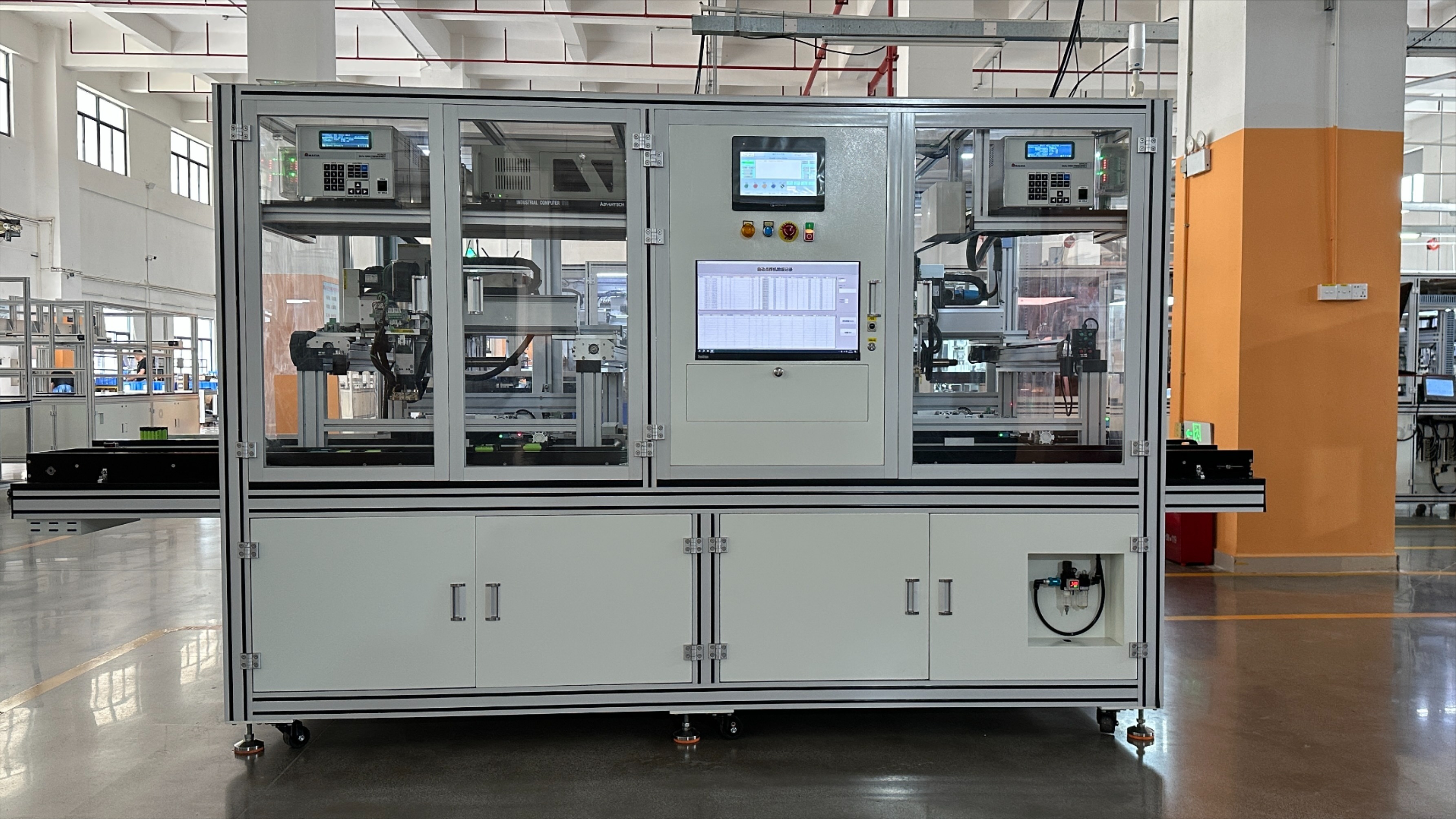
III. Machine Saint Automation: Precise Solution for Lithium Battery Spot Welding
JiSheng Automation adopts a high-precision servo control system and dynamic resistance monitoring technology, forming a triple guarantee of "precise positioning - parameter adaptation - real-time feedback". Its lithium battery spot welding equipment specifically addresses the pain points of manual welding and highlights its core advantages:
1. Triple guarantee, curing stubborn false welding problems
JiSheng Automation adopts a high-precision servo control system + dynamic resistance monitoring technology, forming a "precise positioning - parameter adaptation - real-time feedback" triple guarantee. The AI visual cleaning detection module equipped on the equipment can automatically identify the cleanliness of the terminals, avoiding false welding caused by surface oxidation; through an industry 2000 + process library, it automatically matches the optimal welding parameters for different types of batteries such as 18650, 21700 cylindrical cells, and pouch and square cells, eliminating the problem of parameter mismatch; combined with the ±0.01mm repeat positioning accuracy of the fixture system, the positioning deviation is controlled within 0.03mm, fundamentally reducing the risk of false welding.
2. Intelligent temperature control, eliminating over-welding and splashing
For over-welding and splashing problems, the Machine Saint equipment integrates the advantages of ultrasonic spot welding and resistance spot welding: for thin electrode ears, multi-layer stacked welding, etc., 20kHz-100kHz high-frequency ultrasonic welding technology is adopted, achieving atomic diffusion connection through mechanical vibration, with the heat affected zone less than 0.2mm, avoiding damage to the cell caused by high temperature; for cylindrical battery and nickel strip connection scenarios, microcomputer-controlled energy storage spot welding technology is adopted, with energy fluctuation controlled within ±1.5%, far exceeding the international standard of ±5%, effectively reducing splashing and burn-through phenomena.
3. Flexible production, adapting to rapid change
JiSheng Automation equipment supports modular rapid switching, with the change time shortened to within 30 minutes, perfectly meeting the 2-3 times per month change requirements. The equipment is compatible with various materials such as nickel, copper, and aluminum, and can achieve flexible adaptation with a 5-8mm nickel sheet width and 0.1-0.15mm thickness, meeting the requirements of different module designs. At the same time, it is equipped with a drag-type teaching function, allowing ordinary workers to independently operate after 2 hours of training, without the need for professional engineers to program, significantly reducing operation and maintenance costs.
4. Full process control, quality traceability
JiSheng equipment is equipped with an intelligent monitoring system that uses a high-speed CCD camera (≥5000fps) to collect real-time data during the welding process, generating dynamic resistance curves, energy change graphs, and other quality records to achieve full lifecycle traceability for each weld point. Once any parameter abnormalities occur, the system immediately triggers an alarm and automatically adjusts, along with a regular maintenance reminder function, reducing the equipment failure rate by over 60%. A storage enterprise applied this solution and reported that the welding defect rate dropped from 15% to 0.7%, while production efficiency increased by 3 times, and annual cost savings exceeded 2 million yuan.
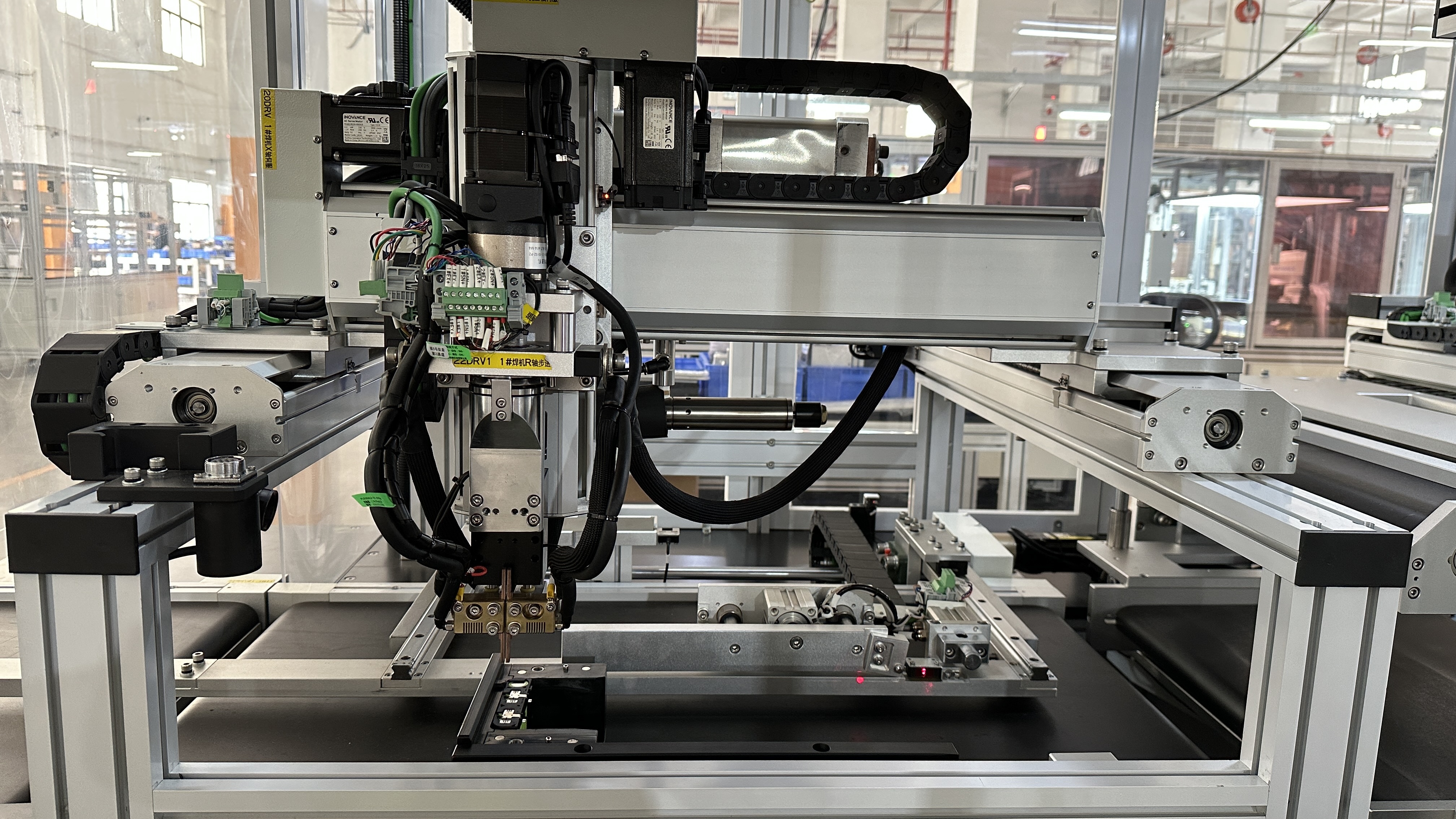
IV. Industry Trends: Automation Upgrade Is Inevitable
With the rapid development of the new energy industry, lithium battery welding equipment is evolving towards intelligence, flexibility, and greenness. Data shows that the market size of microcomputer-controlled energy storage spot welding machines in China exceeded 2.8 billion yuan in 2023, and is expected to approach 6 billion yuan by 2030, with an average annual compound growth rate of over 10%. At the policy level, the "14th Five-Year Plan for Intelligent Manufacturing" clearly requires that the welding automation rate of key projects exceed 60% in 2027, further promoting the process of automation substitution.
For lithium battery manufacturers, manual welding has become a bottleneck hindering development. Automation upgrade is no longer a "choice" but a "must-do". Machine saint automation has deeply specialized in lithium battery spot welding, with technological innovation as the core, creating precise, efficient, and flexible welding solutions. It not only helps enterprises increase the welding yield to over 99% but also builds core competitiveness through cost reduction and efficiency improvement.
If you are troubled by low welding yield, high costs, and poor stability in manual welding, please contact Machine Saint Automation to obtain a customized welding solution. Now, consulting is free to obtain a process assessment report, allowing professional teams to plan the upgrade path for you, helping your enterprise seize the initiative in the new energy field!
Recommended News
Follow Us

Contact Us
Mobile: +86-18681129808(mr. luo)
+86-13509622510(mr.liang)
+86-13612730011(mr.liu)
Tel: +86-769-85872681 | +86-769-85872682
Fax: +86-769-85872680
Email: xingyezdh@163.com | lcb@jsat.cn
Add.: No. 8, Chiling Industrial Third Ring Road, Houjie Town, Dongguan City, Guangdong Province
CopyRight© 2024 Dongguan Jisheng Automation Equipment Technology Co., Ltd